Digital X-Rays

Service

Digital X-Rays

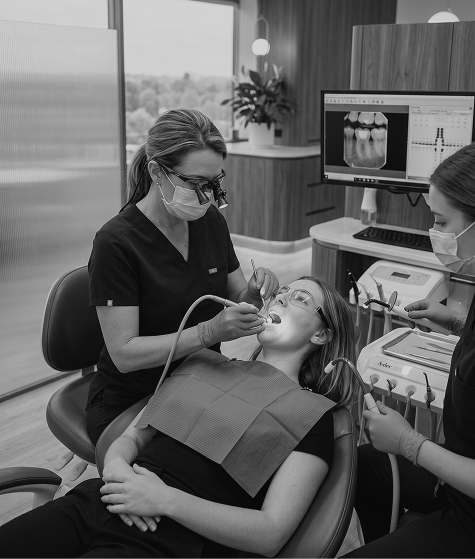
Digital X-rays provide internal imaging that allows Quinn Family Dentistry to evaluate conditions that are not visible during a standard clinical exam. This includes areas between teeth, root structures, and bone support levels. The images are captured digitally and displayed immediately, which allows the clinician to review findings during the same visit. This supports accurate diagnosis and helps guide treatment decisions with clearer clinical information.


Service

Detection of Hidden Decay

Digital X-rays allow identification of decay that forms between teeth or under existing restorations. These areas often do not present symptoms in early stages, which makes them difficult to detect without imaging. Early visibility helps ensure that treatment can be planned before the condition progresses into more serious structural damage.

Service

Root and Bone Evaluation

Imaging is used to assess the condition of tooth roots and surrounding bone structures. This includes checking for infection, bone loss, or changes in structural stability that may affect long-term oral health. These findings are important when planning restorative or surgical procedures.

Service

Immediate Image Review

One advantage of digital imaging is the ability to generate and review results instantly. This allows both clinician and patient to view findings during the appointment, creating a shared understanding of current dental conditions. It also supports faster clinical decisions when treatment is required.

Service

Treatment Planning Support

Digital X-rays are integrated into treatment planning for both preventive and restorative care. The clarity of the images helps define structural conditions more precisely, reducing uncertainty when determining next steps. This ensures that treatment decisions are based on detailed internal visualization.

Service

Ongoing Monitoring

Repeated imaging over time allows changes in dental and bone structures to be tracked. This includes monitoring decay progression, restoration performance, and bone density changes. Long-term comparison supports consistent preventive care and early intervention when changes occur.